COTRCollaborative Orthopedic Trauma Research Group
Get involved

Scholarly output

Publications & presentations

Papers, preprints, podium talks and posters from the group. Search, or filter by type, topic and group member.

28 publications49 presentationssince 2011

Showing 77 of 77

Filters

2026, 11 items

2025, 20 items

  • Journal Article · Dec 11, 2025

    Calcaneus Fractures: A Review of Management, Treatment, and Recent Advances

    Brian A Schneiderman, Bradley A Carlson, Joey P Johnson, Joseph G Elsissy

    Journal of the American Academy of Orthopaedic Surgeons

    Calcaneus fractures remain challenging fractures that are prone to complications. Surgery was previously restricted only to those with soft-tissue envelopes amenable to the extensile lateral approach. However, with the development of the sinus tarsi approach and other percutaneous techniques, more prompt surgical interventions with lower complication rates have become possible. Restoration of hindfoot morphology and facet congruity are the primary goals of surgery. Complications including posttraumatic subtalar arthritis, infection, wound dehiscence, and malunion can be minimized with deliberate treatment decisions.

  • Journal Article · Sep 8, 2025

    Diagnostic Accuracy of Artificial Intelligence for Detection of Meniscus Pathology on Magnetic Resonance Imaging: A Systematic Review

    Peter A Giammanco, Christopher E Collins, Sunny M Trivedi, Reem O Sarsour, Mikayla Kricfalusi, Joseph G Elsissy

    Cureus

    Meniscus tears can be difficult to diagnose on magnetic resonance imaging (MRI) due to the various types of tears. As artificial intelligence (AI) continues to advance, it could serve as a valuable tool that assists physicians with diagnostic accuracy and efficiency. The purpose of this study was to analyze the performance of AI in diagnosing meniscus tears on MRI using an array of studies and to compare the performance of AI to that of physicians. A literature search was conducted on PubMed and Embase for articles regarding the use of AI for the detection of meniscus tears. AI model, number of MRI studies, sensitivity, specificity, accuracy, AUC, and comparison to physicians encompassed the data that was extracted. A total of 18 studies, comprising 47,621 MRIs, were included in this review. The AUC of these AI models ranged from 0.781 to 0.984, averaging 0.912±0.053. The pooled sensitivity and specificity were 0.831±0.097 and 0.868±0.088, respectively. Three of these studies compared their results to those of 10 radiologists and two orthopedic surgeons. When comparing the sensitivity and specificity of AI models to those of physicians, Cochrane's Q was statistically significant (p < 0.01) with large heterogeneity amongst the two groups (I2 = 84.72%). The results suggest that AI's ability to detect meniscus lesions on MRI was relatively strong. When this performance was compared to that of physicians, the results were comparable, highlighting the potential benefits in a clinical setting.

  • Journal Article · Aug 22, 2025

    Characteristics and outcomes of venous thromboembolism-related litigation in orthopaedic surgery

    Haad A. Arif, Andrew Miner, Simon T. Moore, Gavin LeBrun, Abbad Sultan, Joseph G. Elsissy

    Thrombosis Research

    Venous thromboembolism (VTE) is a considerable source of morbidity, mortality, and economic burden within orthopaedic surgery. Our study aimed to analyze the characteristics and reasons for lawsuits pertaining to VTE levied against orthopaedic surgeons.

  • Journal Article · Aug 2025

    Modified Subvastus Approach to the Medial Distal Femur: Cadaveric Dissection

    Michael Trumbo, Bradley Carlson, Derran Bedward, Brian Schneiderman, Joseph Elsissy

    Journal of Orthopaedic Trauma

    This review describes a modified technique for the surgical management of a displaced medial femoral condyle fracture in a 22-year-old man after a motorcycle accident. This case involved an open reduction and the use of a medial buttress plate to restore joint congruity and reduce the risk of varus failure. The modified transfascial approach through the VMO muscle belly was used to facilitate ample exposure while safely protecting the neurovascular structures behind the robust adductor fascia. This technique highlights the utility and benefits of the modified transfascial approach compared with the traditional medial subvastus approach when used in medial distal femur fracture fixation.

  • Journal Article · Aug 2025

    Percutaneous Plating of the Medial Distal Femur: Cadaveric Dissection

    Bradley Carlson, Michael Trumbo, Derran Bedward, Joseph Elsissy, Brian Schneiderman

    Journal of Orthopaedic Trauma

    Percutaneous medial plating of distal femur fractures, particularly comminuted fractures, offers improved biomechanical stability without the soft tissue insult of an open approach. The addition of a medial plate neutralizes the cantilever bending force that arises from the offset between the single lateral locking plate and the femur's anatomical axis. This cantilever bending force has been theorized to be a contributor to the high nonunion rate of distal femur fractures. Although concerns about the proximity of the superficial femoral artery have previously limited widespread adoption of medial plating, there is a considerable medial distal femur safe zone where the superficial femoral artery is not at risk. In cases where supplemental medial fixation would be beneficial and soft tissue or host limitations prevent open instrumentation, percutaneous medial plating is a safe and effective alternative.

  • Journal Article · May 5, 2025

    Gender Differences in the Morphology of the Finger Flexor Pulley System: An Ultrasound-Based Assessment of Recreational Rock Climbers

    Lance L Lamore, Avery Apostle, Jack Lampert, Amily Tuot, Alexandra Lindgren, Sunny Trivedi, Vy Han

    Cureus

    Many rock climbing techniques place tremendous stress on the finger flexor pulley system of the hand and may cause a pulley rupture. A pulley injury can be assessed with ultrasound by measuring an elevated tendon liftoff from the bone during flexion, referred to as the tendon-to-bone distance (TBD). The purpose of this study was to assess gender-specific and experience-related differences in TBD, tendon dimensions, and grip strength among asymptomatic recreational rock climbers to better understand potential anatomical adaptations and injury risks. Methodology We conducted a prospective, cross-sectional study at a single indoor climbing facility in San Bernardino County, California, over several days. A total of 65 adult recreational climbers (36 men, 29 women) completed a health and climbing experience survey. A portable ultrasound probe was used to measure TBD, tendon depth, and tendon width at rest and during maximal isometric flexion. Grip strength was measured using a handheld dynamometer. Sex-based differences were analyzed using independent one-tailed t-tests, with significance set at p-values <0.05. Results The mean age of the participants was 29.3 ± 7.8 years. On average, women reported a maximum climbing grade of V4, while men reported V6. Men had significantly higher grip strength and tendon cross-sectional area (p < 0.001). The average unflexed TBD was 0.20 cm in women and 0.24 cm in men. During flexion, TBD increased by 0.03 cm in women and 0.05 cm in men, with no significant difference (p = 0.07). Conclusions In this study, women exhibited significantly smaller tendon cross-sectional area and lower grip strength compared to men. These anatomical differences warrant further research to explore implications for climbing performance and injury risk.

  • Journal Article · Mar 14, 2025

    Removal of bent or broken tibial intramedullary nails: A systematic review of case studies

    Haad A. Arif, Michael A. Silva, Gavin LeBrun, Joseph G. Elsissy, Christopher T. LeBrun

    Injury

    The bending or fracture of a tibial intramedullary nail is a rare complication with a paucity of literature regarding available methods of extraction. This systematic review discusses the currently described surgical techniques for extracting deformed tibial intramedullary nails as well any potential associated challenges.

  • Journal Article · Jan 31, 2025

    Evaluating the Quality and Readability of Generative Artificial Intelligence (AI) Chatbot Responses in the Management of Achilles Tendon Rupture

    Christopher E Collins, Peter A Giammanco, Monica Guirgus, Mikayla Kricfalusi, Richard C Rice, Rusheel Nayak, and 2 more, Joseph G Elsissy

    Show all 9 authors

    Christopher E Collins, Peter A Giammanco, Monica Guirgus, Mikayla Kricfalusi, Richard C Rice, Rusheel Nayak, David Ruckle, Ryan Filler, Joseph G Elsissy

    Cureus

    The rise of artificial intelligence (AI), including generative chatbots like ChatGPT (OpenAI, San Francisco, CA, USA), has revolutionized many fields, including healthcare. Patients have gained the ability to prompt chatbots to generate purportedly accurate and individualized healthcare content. This study analyzed the readability and quality of answers to Achilles tendon rupture questions from six generative AI chatbots to evaluate and distinguish their potential as patient education resources.

  • Journal Article · Jan 27, 2025

    Diagnostic Accuracy of Artificial Intelligence for Detection of Rib Fracture on X-ray and Computed Tomography Imaging: A Systematic Review

    Christopher E Collins, Peter Aldo Giammanco, Sunny M Trivedi, Reem O Sarsour, Mikayla Kricfalusi, Joseph G Elsissy

    Journal of Imaging Informatics in Medicine

    Rib pathology is uniquely difficult and time-consuming for radiologists to diagnose. AI can reduce radiologist workload and serve as a tool to improve accurate diagnosis. To date, no reviews have been performed synthesizing identification of rib fracture data on AI and its diagnostic performance on X-ray and CT scans of rib fractures and its comparison to physicians. The objectives of this study are to analyze the performance of artificial intelligence in diagnosing rib fracture on X-ray and computed tomography (CT) scan using multiple clinical studies and to compare it to that of physicians findings of rib fracture. A literature search was conducted on PubMed and Embase for articles regarding the use of artificial intelligence for the detection of rib fractures up until July 2024. AI model, number of cases, sensitivity, and comparison to physicians data was collected. A total of 29 studies, comprising 125,364 cases, were included in this review. The pooled sensitivity of AI models was 0.853. Nineteen of these studies compared their results to radiologists, orthopedic surgeons, or anesthesiologists, totalling 61 physicians. Of these 19 studies, the radiologists had a pooled sensitivity of 0.750. The sensitivity of AI in these studies by comparison was 0.840. The results suggest that artificial intelligence has a promising role in detecting rib fractures on X-ray and CT scans. In our interpretation, the performance of artificial intelligence is similar to, or better than, that of physicians, alluding to its encouraging potential in a clinical setting as it may reduce physician workload, improve reading efficiency, and lead to better patient outcomes.

  • Journal Article · Jan 9, 2025

    Evaluating the Quality and Readability of Information Provided by Generative Artificial Intelligence Chatbots on Clavicle Fracture Treatment Options

    Peter A Giammanco, Christopher E Collins, Jason Zimmerman, Mikayla Kricfalusi, Richard C Rice, Michael Trumbo, and 3 more, Joseph G Elsissy

    Show all 10 authors

    Peter A Giammanco, Christopher E Collins, Jason Zimmerman, Mikayla Kricfalusi, Richard C Rice, Michael Trumbo, Bradley A Carlson, Rebecca A Rajfer, Brian A Schneiderman, Joseph G Elsissy

    Cureus

    Generative artificial intelligence (AI) chatbots, like ChatGPT, have become more competent and prevalent, making their role in patient education more salient. This study aimed to compare the educational utility of six AI chatbots by quantifying the readability and quality of their answers to common patient questions about clavicle fracture management. Methods ChatGPT 4, ChatGPT 4o, Gemini 1.0, Gemini 1.5 Pro, Microsoft Copilot, and Perplexity were used with no prior training. Ten representative patient questions about clavicle fractures were posed to each model. The readability of AI responses was measured using Flesch-Kincaid Reading Grade Level, Gunning Fog, and Simple Measure of Gobbledygook (SMOG). Six orthopedists blindly graded the response quality of each model using the DISCERN criteria. Both metrics were analyzed via the Kruskal-Wallis test. Results No statistically significant difference was found among the readability of the six models. Microsoft Copilot (70.33±7.74) and Perplexity (71.83±7.57) demonstrated statistically significant higher DISCERN scores than ChatGPT 4 (56.67±7.15) and Gemini 1.5 Pro (51.00±8.94) with similar findings seen between Gemini 1.0 (68.00±6.42) and Gemini 1.5 Pro. The mean overall quality (question 16, DISCERN) of each model was rated at or above average (range, 3-4.4). Conclusion The findings suggest generative AI models have the capability to serve as supplementary patient education materials. With equal readability and overall high quality, Microsoft Copilot and Perplexity may be implicated as chatbots with the most educational utility regarding surgical intervention for clavicle fractures.
  • Podium

    Characteristics and Outcomes of Venous Thromboembolism-Related Litigation in Orthopaedic Surgery

    Haad Arif, Moore, Miner, Gavin LeBrun, Dr. Joseph Elsissy

    AAOSSan Diego, CA

    Published in Thrombosis Research →Health Equity & Policy

  • Podium

    Elevated Coagulopathy and Inflammation in Vertical Shear Pelvic Fractures

    Sultan Baz, Reem Sarsour, Brian A. Schneiderman, Dr. Joseph Elsissy

    OtherColton, CA

    Clinical Outcomes

  • Podium · Poster

    Insurance Status and Its Effect on Resource Utilization and Outcomes in Lower Extremity Trauma

    Dr. Joseph Elsissy

    OtherGuadalajara, MX / Colton, CA

    Health Equity & Policy

  • Podium · Poster

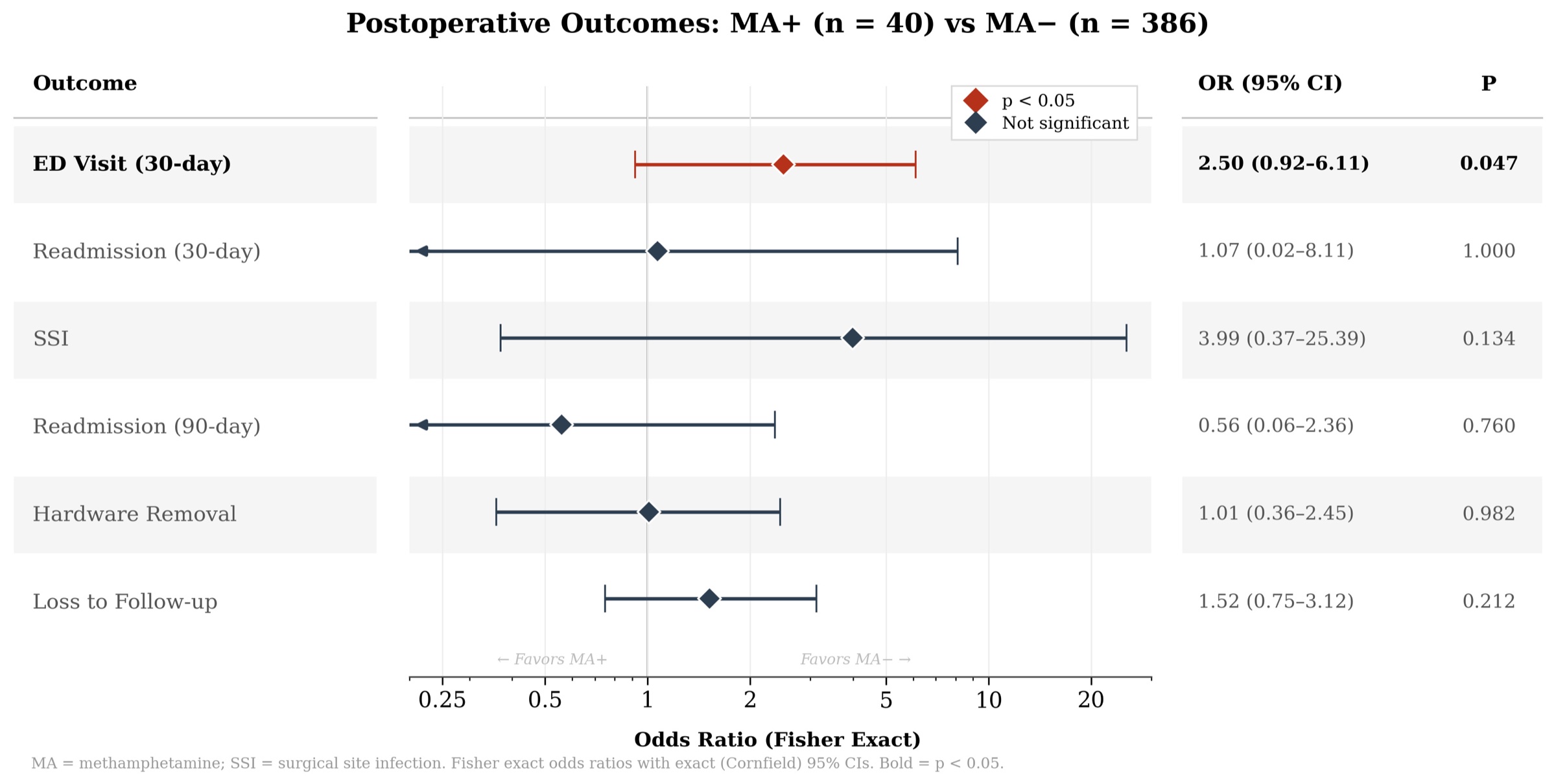
    The Impact of Methamphetamines on Hospital Disposition and Follow-up Adherence in Lower Extremity Trauma

    Dr. Joseph Elsissy

    OtherGuadalajara, MX / Colton, CA

    Health Equity & Policy

  • Poster

    Divergent BMI Trends in Proximal Humerus Fractures: An Age and Sex Stratified Study

    Dr. Joseph Elsissy

    Other / ORSColton, CA / Phoenix, AZ

    Health Equity & Policy

  • Poster

    Evaluating Quality and Readability of Information Provided by Generative Artificial Intelligence Chatbots on Clavicle Fracture Treatment Options

    Dr. Joseph Elsissy

    OtherCarmel, CA

    AI & Imaging

  • Poster

    Meta-Analysis and Systematic Review of Diagnostic Performance of Machine Learning Algorithms on Adult Wrist Fractures

    Dr. Joseph Elsissy

    OtherColton, CA

    AI & Imaging

  • Poster

    Methamphetamines and Outcomes in Lower Extremity Trauma

    Dr. Joseph Elsissy

    OtherColton, CA

    Health Equity & Policy

  • Poster

    Traumatic Lumbar Hernia Repair Using Bone Anchors Without Mesh via Intraperitoneal View and Multidisciplinary Care: A Case Series

    Dr. Joseph Elsissy

    OtherColton, CA

    Surgical Anatomy & Technique

  • Poster

    Variability in Interventional Radiology Consultation Rates Across Young-Burgess Classification of Pelvic Fracture Patterns

    Dr. Joseph Elsissy

    OtherColton, CA

    Clinical Outcomes

2024, 17 items

2023, 2 items

  • Journal Article · Oct 10, 2023

    Pelvic Ring Injuries: Stable or Not?

    Joseph G. Elsissy, David E. Ruckle, Christopher LeBrun, Joey P. Johnson

    Journal of the American Academy of Orthopaedic Surgeons

    Pelvic ring injuries occur in varying severity and in vastly different patient demographics. Knowledge regarding which of these injuries require surgical intervention and which can be managed nonsurgically continues to evolve. Previous studies have shown validated criteria for sacral fractures and the posterior ring, explored the role of examination under anesthesia, and other forms of dynamic imaging. Although there is substantial information available, a comprehensive synthesis of this information is lacking. This article provides a comprehensive review of radiographic markers suggestive of stability, discusses treatment strategies, and proposes a treatment algorithm that is easily understood and applicable to not only those with a trauma background but also the general orthopaedic surgeon who will see these injuries frequently while on call.

  • Poster

    Bent or Broken? Methods of Removing a Deformed Tibial Intramedullary Nail: A Systematic Review

    Dr. Joseph Elsissy

    OTASeattle, WA

    Surgical Anatomy & Technique

2022, 1 item

2020, 2 items

  • Journal Article · Aug–Sep 2020

    Secondary Chondrosarcoma Arising from the Proximal Fibula Presenting as Sciatica

    Robert C. Vercio, Joseph G. Elsissy, Nadine L. Williams, Lee M. Zuckerman

    Journal of Orthopaedic Case Reports

    Secondary chondrosarcoma is a rare entity arising from a pre-existing cartilaginous lesion. Transformation of an osteochondroma to a chondrosarcoma occurs in <1% of cases. Sciatica is a common problem that can cause significant pain, weakness, and numbness.

  • Journal Article · Jan 2020

    Bacterial Septic Arthritis of the Adult Native Knee Joint: A Review

    Joseph G. Elsissy, Joseph N. Liu, Peter J. Wilton, Ikenna Nwachuku, Anirudh K. Gowd, Nirav H. Amin

    JBJS Reviews

    » Acute bacterial septic arthritis of the knee is an orthopaedic emergency and, if left untreated, can result in substantial joint degradation. » Important risk factors for development of septic arthritis include age of >60 years, recent bacteremia, diabetes, cancer, cirrhosis, renal disease, drug or alcohol abuse, a history of corticosteroid injection, a recent injury or surgical procedure, a prosthetic joint, and a history of rheumatoid arthritis. » The diagnosis is primarily based on history and clinical presentation of a red, warm, swollen, and painful joint with limited range of motion. Laboratory values and inflammatory markers from serum and joint fluid may serve as adjuncts when there is clinical suspicion of septic arthritis. » The initial and general antibiotic regimen should cover methicillin-resistant Staphylococcus aureus and gram-negative and gram-positive organisms. The antibiotic regimen should be specified following the culture results of the infected joint. » Operative management involves either arthrotomy or arthroscopy of the knee with thorough irrigation and debridement of all infected tissue. The Gächter classification is useful in establishing a prognosis or in determining the need for an extensive debridement.

2019, 9 items

2018, 7 items

  • Journal Article · Sep 25, 2018

    The Significance of Adverse 3rd-Body Wear Damage in the Failure of Metal-on-Metal Bearings used in resurfacing and Total-Hip Arthroplasty

    Elsissy JG, Clarke IC, John A, Smith EJ, Donaldson TK.

    Acta Scientific Orthopaedics

    Large diameter, metal-on-metal (MOM) bearings used in total hip arthroplasty (THA) have been abandoned due to adverse wear. Commonly cited risks included excessive wear in large diameter CoCr bearings, edge-loading in steeply-inclined cups, and corrosion under modular CoCr heads. An alternative failure mechanism was suggested to be due to hip-impingement whereby the cup rim habitually creates pitting and microgroove damage in the opposing femoral head. It is to be noted that an RSA hip at impingement will risk a CoCr cup impinging on the tissues of the natural neck. In contrast, THA impingement risks a CoCr cup impinging on the metal femoral-neck. For this MOM retrieval study, we matched 12 each retrievals of total hip arthroplasty (THA) with modular CoCr heads and resurfacing arthroplasty (RSA) for study of microscopic wear damage. Anatomic RSA and THA models were developed to compare head:neck ratios, range of hip motion, and location of microgroove damage sites at impingement. The salient finding we report for the 1st time was that all RSA bearings featured arrays of large pits, typically 40 - 100 um or larger. The likely source of large metal fragments in RSA cases is suggested to be the CoCr cup impinging/subluxing on the femoral head, thereby creating microgroove damage. The circulating metal fragments becoming trapped under the cup created the basal and polar microgrooves, typically 40 - 100 um wide, and aligned under the rim profile of the cup. The abrasive power of such large circulating metal fragments was evident in the microscopic analyses in these 24 MOM retrievals. CoCr debris previously analyzed in MOM simulator and retrieval studies was typically characterized with particles sized less than 50 nm, i.e. 2,000 times smaller. The evidence of pitting and micro-groove morphology proved similar in RSA and THA regardless of design differences. Our study is the 1st confirmation of the MOM wear/impingement mechanics offered in a prior study of fixed-head McKee-Farrar THA, i.e. hip impingement produces fatigue wear in CoCr components with release of large CoCr fragments, consistent with sliding/impaction mechanisms and adverse wear in MOM. With continued function these large fragments will decompose into CoCr particulates and also ionize into solution. Source: https://actascientific.com/ASOR/pdf/ASOR-01-0003.pdf. Abstract reproduced under CC BY 4.0 (https://creativecommons.org/licenses/by/4.0/); formatting normalized.

  • Poster

    Antiproliferative Effect of Bupivacaine on Patient-Derived Sarcoma Cells

    Dr. Joseph Elsissy

    OtherRome, Italy

  • Poster

    Effect of Body Mass Index (BMI) on Outcomes of Patients with Bone Tumors Who Undergo Endoprosthetic Joint Reconstruction

    Dr. Joseph Elsissy

    OtherRome, Italy

    Clinical Outcomes

  • Poster

    Management of Myxoid Liposarcoma: A Survey of the Members of the Connective Tissue Oncology Society

    Dr. Joseph Elsissy

    OtherRome, Italy

    Clinical Outcomes

  • Poster

    Short Tau Inversion Recovery Magnetic Resonance Imaging for Staging and Screening in Myxoid Liposarcoma

    Dr. Joseph Elsissy

    OtherRome, Italy

    Published in Journal of Orthopaedics →Clinical Outcomes

  • Poster

    The Effect of Bupivacaine and Lidocaine on Osteosarcoma Cells

    Dr. Joseph Elsissy

    OtherRome, Italy

  • Poster

    The Effect of Non-steroidal Anti-inflammatory Drugs on Osteosarcoma Cells

    Dr. Joseph Elsissy

    OtherRome, Italy

    Published in European Review for Medical and Pharmacological Sciences →

2014, 1 item

  • Podium

    MOM Resurfacing Wear Patterns and the Effect of Limited ROM

    Dr. Joseph Elsissy

    OtherKyoto, Japan

2013, 4 items

  • Poster

    Macro-damage Abrasion Mode Created by Particulates Formed During Impingement of Large-Diameter MOM Bearings

    Dr. Joseph Elsissy

    ORSSan Antonio, TX

  • Poster

    MOM Resurfacing Can Impinge with Evidence of Subsequent 3rd-Body Abrasion by CoCr Particles

    Dr. Joseph Elsissy

    ORSSan Antonio, TX

  • Poster

    Wear Pattern Comparison Between RSA and THA Retrievals Reveal In-Vivo Subluxation

    Dr. Joseph Elsissy

    ORSSan Antonio, TX

2011, 1 item

  • Poster

    Preterm Birth Induced by Progesterone Receptor Antagonism Is Preceded by Inflammatory Cervical Remodeling in a Murine Model

    Dr. Joseph Elsissy

    OtherDallas, TX

Other dates, 2 items

Propose a project